

US and Iran Sign Initial Peace Agreement to End Conflict, Nuclear Talks to Continue
An initial peace agreement aimed at ending months of conflict between the United States and Iran has been signed by both countries, paving the way for an immediate ceasefire and the gradual restoration of economic ties.
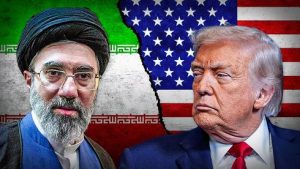
The deal, signed by Donald Trump during the G7 Summit in France, and later endorsed by Iranian President Masoud Pezeshkian in Tehran, includes several major provisions designed to stabilize the region and global markets.
Under the agreement, the strategically important Strait of Hormuz will reopen to international shipping, easing concerns over disruptions to global energy supplies. The deal also outlines a proposed $300 billion (£224 billion) reconstruction package for Iran and commits the United States to lifting all sanctions imposed on the country.
However, negotiations over Iran’s nuclear programme — the central issue cited by Washington as the reason for the conflict — remain unresolved. Both sides have agreed to continue discussions over an initial 60-day period, which may be extended if necessary.
Speaking to reporters at the lakeside resort of Evian-les-Bains during the G7 summit, President Trump said the agreement would help prevent a global economic crisis.
“I didn’t want to see economic catastrophe,” Trump said, warning that continued conflict could have triggered severe repercussions for the world economy. He added that financial markets responded positively whenever prospects for peace improved.
Despite the breakthrough, tensions remain high. Iran’s parliamentary speaker and chief negotiator, Mohammad Bagher Ghalibaf, expressed continued distrust of the United States, stating that Iran remains prepared to respond if negotiations fail.
“Our finger is on the trigger,” Ghalibaf said in remarks carried by Iranian state media. “If the enemy does not understand the language of logic, we will return with the language of power.”
The conflict began on 28 February when the United States and Israel launched military operations against Iran, resulting in the deaths of Supreme Leader Ayatollah Ali Khamenei and several senior military officials, according to the information released by the parties involved.
Since then, escalating tensions and the effective closure of the Strait of Hormuz have disrupted global energy markets, contributing to rising oil and liquefied natural gas prices and renewing inflationary pressures worldwide. Approximately 20% of the world’s oil and LNG shipments typically pass through the vital waterway.
The coming weeks of nuclear negotiations are expected to determine whether the initial peace agreement can evolve into a comprehensive and lasting settlement.
Credit: This article is rewritten and adapted from reports originally published by BBC News.

